There is often some difficulty in life determining what is true. The most famous examples come from ethics, such as if the statement "living life according to your virtues is the best life to lead" is true. Or, you could even point to the vigorous debates that occurred some years ago over whether or not Pluto should be considered a planet. In that case, the debate was over whether the statement "Pluto is a planet" is true or false. In philosophical circles, these sorts of arguments can oh-so-often lead to a debate which centers around whether the property of truth is inherent or perceived. Basically, if I say "Pluto is a planet," I would be wrong by today's standards, but would I still be wrong if I said that same thing 15 years ago, when many people did in fact consider Pluto to be a planet? Does truth change with our perception of the universe, or are truthfulness and falseness already inherent in everything we say, even if we may not be aware of which property dwells in our words?
Firstly, the knee-jerk reaction would be to say that truth is an inherent property of the universe. Truth doesn't change simply because we have a different view point. However, if we follow this idea to the logical conclusion, we come up with an interesting idea. When making statements concerning the future, such as "I will have oatmeal for breakfast tomorrow," truth as an inherent property would still apply. Either it is true and I will have oatmeal, or it is false and I will not have oatmeal. We may not know what the answer is, but our perception of this statement at this point in time does not affect whether this statement is true or false. The statement already exists in a state of being true or false, and will not change. In short, my breakfast is already determined. And because inherent truth would apply to all possible statements, then all possible things are already determined. This conclusion doesn't necessarily debunk the idea of inherent truth per se, because the debate surrounding determinism is still strong; tying inherent truth to determinism doesn't necessarily prove or disprove either idea.
However, there is still the less popular idea of truth being a perceived quality of the universe. If truth is a perceived quality of the universe, then that means that truth is a construct of our consciousness. Truth doesn't exist beyond our perception of the universe (and the information contained therein). This distinction between "truth" and "information" is important for this side of the argument. Truth lives inside of consciousness as a lens through which we can then perceive information. If you have less information, you may be more inclined to consider different things to be true than if you have more information. This option doesn't affirm or deny determinism, because the conclusion says nothing about how truth can be applied to the future. (It is worth noting, though, that this conclusion can be used as a small building brick in an argument for the idea that there in only a single consciousness that can be proven to actually be a true conscious--you--and everything beyond is impossible to prove--essentially Descartes's First and Second Meditations.)
Overall, it seems to me to make far more sense to make the distinction between information and truth, and to label "information" as inherent and "truth" as an perceived property that simply arises out of how consciousness attempts to experience reality. It makes less assumptions about the possible determinism of the universe, and by Occam's Razor, therefore seems to be the more rational conclusion to take. As such, we can continue on with our scientific method of utilizing testable hypotheses and proving then to be either correct or incorrect without the philosophical conundrum of whether the hypothesis was false before we even proved it to be so.
Sunday, May 15, 2016


Saturday, May 14, 2016
On Feelings and Emotion
However, in dismissing emotion, we can also dismiss a very large part of our collective psyche. The Patriot Act wasn't necessarily passed due to pure and unadulterated reason. It was passed because people were afraid, and that's not necessarily a bad thing. The debate surrounding the politics of the Patriot Act aside, the thing to take away from this is the fact that the utilization of fear and other feelings in decision making is prevalent and to ignore such a large sociological motivator would be to cut off both of our intellectual feet. In addition, a case can be made for emotion on the grounds of mental health. The debate surrounding mental health as an issue in today's society focuses largely on how to pay for the care of these people, yet we never seem to recognize that the sociological environment that we have fostered could be an essential factor in cultivating these skyrocketing rates of depression, anxiety, and other illnesses.
The interesting thing is, there is a case to be made for more emphasis on rational thought. Science, for example, is based on reaching the highest level of objectivity that you can whilst observing the world, and one simply can't do that while viewing data through an emotional lens. Science can in turn be said to be largely responsible for the massive amounts of progress we, as a species, have seen in the past several centuries. As such, an expansion of science, and a subsequent reduction of emotion, sounds extremely desirable. But as mentioned before, this still has significant drawbacks in a world that still operates on reality rather than theory.

What we need is a new way of looking at emotion. Today, many people think of emotion as a scalar quantity. That is, it is though of on a scale. Even professional institutions, like hospitals, read emotion and pain on a scale of one to ten. This is completely ludicrous if one accounts for the fact that the very nature of emotion is subjective and how, therefore, any attempt at obtaining quantitative data from a qualitative rating would untrustworthy. And this is where the root problem lies: trying to transition qualitative experience to a quantitative report. A solution should therefore attempt to preserve the qualitative nature of emotion, even as we try to communicate with other people.
I propose an idea: instead of looking at emotion as a scalar quantity, we instead need to recognize that it is instead a vector. That is, it contains both magnitude and direction. This is due to the fact that a large part of how we view the world has to do with the fact that our consciousness exists in liner time. If you are happy, it's not like you're happy at a single point in time. It would be more accurate to say that you feel like things are going well. The general trend you see in your life is a positive one. Of course, shifting your frame of reference to include, say, a week from now when you have a large project due that you haven't finished, you will be then less happy because that assignment then lowers the average of the trend line of you life a little. The same can be said for emotional disorders like depression. It's not a feeling sad all the time, as many people point out. A better way to look at it would be to see it as feeling like things are continuously getting worse. The emotional trend line of your life always seems to be pointing down in some context or another. Understanding that emotions have direction, they have acceleration, is crucial to coming up with a better way to express emotion and incorporate it into the entirety of our lives.
Wednesday, November 11, 2015
Answer C: None of the Above

Possibility Three: It Doesn't Matter (Neither)
Now, this may sound like a no-brainer. Of course it doesn't really matter, life goes on. Yet this is a special case, just bear with me. We assume that in our universe (or our perceived universe, as you'd like to call it), there is nothing that will empirically convince me with certainty that my experience is real in that the universe exists outside of me. In other words, there is no proof that the universe that the universe itself is real or fake. Nothing that you can observe anywhere will convince you beyond a doubt of either possibility.
Hold that idea in your mind, and let us pretend that there was something that indicated the reality of the universe. Imagine there was a ball that was red if the universe was real, yellow if it was not. Only the ball changed depending on the answer, and the answer would change nothing but the ball.
Now, obviously, there is no such ball in the universe. Because there is no such ball, that means that there is nothing in the universe to indicate whether or not it is real. This also means that there is nothing in the universe affected by whether or not that answer is true. Therefore, regardless as to whether or not it is real, the universe remains the same, because there is no indication, no proof of either possibility.
I just wish to point out that this is different from saying "who cares, it doesn't matter." This is saying that "it has no measurable or empirical effect on my consciousness one way our another, other that academic curiosity; which is not proof, but rather something directly affected by empirical evidence masquerading as proof." In short, this proves that it doesn't matter, rather than dismissing it as unimportant to your life because the question ranks so low in your philosophical priorities.
So there Descartes. It has taken me months upon months of trying to climb out of the hole you dug but never appropriately bridged. Finally, I have reached the cusp of enlightenment once again, and I want you to know, you were very little help. The ladder you tried to provide with Meditation III was shoddily made. Hopefully, I was able to provide my universe with a more concrete answer.
Sunday, August 30, 2015
Why is there something rather than nothing?
First: yes, there is something. I will not dispute that. How could there not be something? Even Descartes didn't dispute that when he showed with his Second Meditation that the only thing to truly and indisputably exist is something doing the experiencing. Aka, you. So even if everything you experience is false, you yourself still exist, because something is doing the experiencing. But the question is, why?
 Possibility One - The Universe Exists in Independence
 Possibility Two - You and Only You Exist
 However, if we entertain Possibility Two, there are still questions. If only we exist, then that means Nothing outside of us exists. But Nothing can't exist, so we exist as everything, everywhere. Then why are we reduced to such small visceral states? Whys do we seem bounded when we must be boundless? Ah, it is the nature of Everything. Everything seems boundless, but it is a trick of infinity. We are infinitely complex, but not infinitely big. This means that the Nothing exists only as a counterpart to how we are complex, rather that large. We exist as we do because you fell that way on the curve of probability that extends between Everything and Nothing. You can exist in differing states between Everything and Nothing because of the way you are infinitely complex, and you infinite complexity allows for such a limbo to occur.
Before we can even begin to answer such an amazing question, we must discuss the reality of how the universe works. As I see it, there are two possibilities. One, you exist and the entire universe that you exists in will continue to exist even if you are not there to perceive it. Or, two, you exist, purely subjectively, and the idea that things exist outside your experience of them is a false assumption. It's the classic "if a tree falls in the middle of a forest with no one around, does it make a sound?" question.
 Possibility One - The Universe Exists in Independence
The tree will still make a sound as it falls even if you are not around to hear it. This seems to be the more intuitive (and, quite frankly, less egotistical) idea. Things happen and events take place outside your realm of observation. How accurate your observations are (as they are perceived through fallible senses) is up for debate. But the main point is that things happen that are beyond you perception, and their effects slowly reach you over time, rather than random effects being generated by our senses, and interpreted by us as cause and effect.
This way supports that things exists. Not only is there an experiencer existing, but also something being experienced.

Even proving you exist as you think you exist can be tricky at best, impossible at worst. However, it is indisputable that something exists because there is something to be doing the experiencing. Now, if we say that just you exist and nothing else exists as you experience it, then how are you experiencing anything? Well, remember how there is an epistemic horizon disallowing you from really seeing how your "consciousness" works, and creating the illusion of "free" will? There are actually two epistemic horizons. One, as previously mentioned, is the subconscious horizon. The second is the horizon of your senses, or your sensory horizon. The sensory horizon hides how and what we are actually perceiving, and the subconscious horizon hides how we are actually processing this information. This unfortunately leaves us with a quite a narrow band of "conscious" thought. So, you are still experiencing things, but they are through your senses, and your senses lay beyond your sensory horizon. This means that for all you know, sensory input is another part of you, just on a superconscious level. You are quite literally dreaming.
All of this does explain how you can exist and nothing as you experience it does, but it does not quite answer the question of why. We'll get to that, Alice. First we must continue down the rabbit hole.
Either way, things exists, so why does it matter? Well, each view changes it's reciprocal; that is, nothing. And is there a way to prove or disprove either one? Well, there are two ways to do this, and they both involve disproving Possibility Two: you either have to experience something that could not, at all, have been produced by your superconscious (and therefore go completely and utterly insane), or you could die. Seeing as how our options are limited, let us simply explore both venues.
If Possibility One (the universe exists in independence) is true, then let us apply Superstring Theory to this idea. Superstring Theory ends in the tenth dimension (that is, Everything, capital E), and never explains an eleventh. However, if we apply Possibility One's nothing to this eleventh dimension, then the eleventh dimension becomes a curve of probability between Everything and Nothing. Obviously, we fall on the Everything side because we can do the experiencing. Nothing can't fall on Nothing, because if it did, it would be Nothing, and therefore not exist. So this true Nothing exists, but doesn't exist, because there is nothing ever to say that it does exist. That is why it has us so befuddled, because even nothing is something, and is therefore not nothing. Because this 11th dimension Nothing exists but can't, automatically, we exist. Voila.
To sum up, while I cannot yet give an answer as to which is right, One or Two, I can tell you, in short: we exist because Nothing does exist, but can't. We are the default. Or rather, I am. There is no proof that you exist. Nothing you could present to me to prove that you are actually presenting it to me. Alas, that is the curse of existing. Because we are not Nothing, we must be Everything.
Thursday, July 16, 2015
How The Sky Could Actually Be Not Blue
People will often ask the question "What color is the sky?", or "Is the sky blue?", usually with verbal irony to point out that something is obvious or indisputable. But really, now. This conclusion that the sky is blue is really based off two assumptions, and where there are assumptions, there can be mistakes. So let us, truly, examine the question: "Is the sky blue?", beginning with two assumptions.
 First: color is an inherent property in things, and is not just perceived by an observer of these objects. But honestly, who is to say that color is something that is inherent in the universe. How could you convince someone that color is real, and not simply something your brain adds to the world to try to make sense of the reality in which it exists? Or is color really a property of something, because two people can look at two things of the same color and match them together consistently? Well, the truth (as usual) probably lies somewhere in the middle. The difference between whether something is inherent or perceived depends on whether or not the property is quantifiable. For example, thermal energy is something inherent in an object, but whether is is hot or cold is subjective, and therefore, perceived. Applying this to color, color itself can be said to be inherent. You can measure the wavelength of light, and since this is what gives light "color", then it is quantifiable. But the instant we say something is "green", or "dark" or even "bright red", we switch to color being perceived. This is because there is no way to measure "greenness" or how bright a color appears. In summary: color (or rather, wavelengths of light) is technically an inherent quality; but it's experienced subjectively, and is therefore (to people) actually a perceived quality.
Second: people have no way of knowing that the color they perceive as "blue" is the same blue for other people. This is the real crux of the matter. Since color is actually perceived, and subjective, there is no way to know that your mother didn't see the sky in a color you would call "green" or "brown", while you see it in a color she would call "orange". Your mother taught you the color of the sky is "blue". However, there is no way to teach you what the actual color blue really looks like, because it is impossible to try to prove that you two are experiencing the color in exactly the same way.
So between color being a subjective property and the uncertainty of how it is perceived, the sky could (in theory) be not blue to you compared to anyone else's "blue". One could argue that because we both give the name to that perceived color "blue", it is as good as the same, because we both think of it as blue. But the name and the color are two completely separate entities. So yes, the sky is "blue" (according to you), but in reality, it may not actually be blue (according to everyone else). It could be red. They key word here is could. So the next time you think "The sky is blue.", now you know to doubt even that axiom of your existence.
First: color is an inherent property in things, and is not just perceived by an observer of these objects. But honestly, who is to say that color is something that is inherent in the universe. How could you convince someone that color is real, and not simply something your brain adds to the world to try to make sense of the reality in which it exists? Or is color really a property of something, because two people can look at two things of the same color and match them together consistently? Well, the truth (as usual) probably lies somewhere in the middle. The difference between whether something is inherent or perceived depends on whether or not the property is quantifiable. For example, thermal energy is something inherent in an object, but whether is is hot or cold is subjective, and therefore, perceived. Applying this to color, color itself can be said to be inherent. You can measure the wavelength of light, and since this is what gives light "color", then it is quantifiable. But the instant we say something is "green", or "dark" or even "bright red", we switch to color being perceived. This is because there is no way to measure "greenness" or how bright a color appears. In summary: color (or rather, wavelengths of light) is technically an inherent quality; but it's experienced subjectively, and is therefore (to people) actually a perceived quality.Second: people have no way of knowing that the color they perceive as "blue" is the same blue for other people. This is the real crux of the matter. Since color is actually perceived, and subjective, there is no way to know that your mother didn't see the sky in a color you would call "green" or "brown", while you see it in a color she would call "orange". Your mother taught you the color of the sky is "blue". However, there is no way to teach you what the actual color blue really looks like, because it is impossible to try to prove that you two are experiencing the color in exactly the same way.
So between color being a subjective property and the uncertainty of how it is perceived, the sky could (in theory) be not blue to you compared to anyone else's "blue". One could argue that because we both give the name to that perceived color "blue", it is as good as the same, because we both think of it as blue. But the name and the color are two completely separate entities. So yes, the sky is "blue" (according to you), but in reality, it may not actually be blue (according to everyone else). It could be red. They key word here is could. So the next time you think "The sky is blue.", now you know to doubt even that axiom of your existence.
Thursday, May 28, 2015
On The Existence of Free Will
It seems all a great mystery, whether or not we are truly free. Authors have written narratives centered around the idea of free will since fiction became a popular pastime. It's a great theological debate on whether or not we are truly free to make our own decisions or not. It certainly seems that way at times. After all, people should be accountable for their actions. One should't be allowed to escape from consequences simply because they can claim that they are not free to do as they choose. But how can one factor the idea of free will into a causal and scientific universe? These conflicting ideas seem to create two distinct camps with opposite views. A dichotomy, if you will. But dichotomies are almost always wrong.
However, let us examine the two sides of the story first. In the first place, the idea of free will existing. It almost seems it must. You can choose whether or not to move your left index finger now, or the next second, or not all. Plus, as I mentioned earlier, how can people be held accountable for their actions without the idea of their having made their own decisions that allowed them to commit an act that was against a set of laws? If one factors out the idea of free will, many questions open up, whose iterations never seem to end, as is what happens when someone tries to answer a subjective question objectively. So the answer to this subjective question must be subjective as well, hence free will must exist to some extent. Not to mention that the causal model of the universe entirely ignores superstring theory of branching time, and quantum probability. To try to eliminate this idea opens up a whole untangle-able can of worms.
 Next, free will not existing. How can free will exist in our causal and physical existence? If we allow the idea of free will separate from external influences, aka, free from causal interference like everything else, then the only thing else it can be is random. A random influence upon our "consciousness"? The idea isn't free will, yet how can something be free and non-causal, yet not random? The idea causes cognitive dissonance because it's impossible. Yes, there is probability, and time branches, but these are not caused by free will, but by the probabilistic nature of the universe. No free will involved.
So, who is right?
Well, it's presented as a dichotomy, so let's step back and allow for the idea that neither are 100% correct. First, let's do this by realizing that there is a difference between free will and just plain will. Second, that even in the causal model of the universe, you still have to deal with your epistemic horizon, that is, you can only know so much about yourself and what makes you do what. Third, quantum probability does factor in to allow for superstring theory, but only over a broad spread.
Here is the solution as I see it: free will itself is an illusion, but will, the intent, is entirely different and real. The epistemic horizon allows for the complete illusion of free will. So you are predictable, and not technically free of causal relationships. But only over a short period of time, and by that, I mean, a subjective estimate of how someone will immediately react (so long you have enough information about said person and the stimuli they will receive) (also emphasis on estimate). The quantum probability and time branching means that the future is not deterministic. Everything is still probabilistic, but there are simply things that are more likely to happen that others. So there isn't free will, but the future is still random. It's just not up to your decisions on how things pan out in your reality.
To sum up: no. There isn't such a free will. It's an illusion caused by being human. But we should continue to pretend for ethical reasons, the fact that the future is still probable, will still exists, and I am not one to advocate anarchy.
However, let us examine the two sides of the story first. In the first place, the idea of free will existing. It almost seems it must. You can choose whether or not to move your left index finger now, or the next second, or not all. Plus, as I mentioned earlier, how can people be held accountable for their actions without the idea of their having made their own decisions that allowed them to commit an act that was against a set of laws? If one factors out the idea of free will, many questions open up, whose iterations never seem to end, as is what happens when someone tries to answer a subjective question objectively. So the answer to this subjective question must be subjective as well, hence free will must exist to some extent. Not to mention that the causal model of the universe entirely ignores superstring theory of branching time, and quantum probability. To try to eliminate this idea opens up a whole untangle-able can of worms.
 Next, free will not existing. How can free will exist in our causal and physical existence? If we allow the idea of free will separate from external influences, aka, free from causal interference like everything else, then the only thing else it can be is random. A random influence upon our "consciousness"? The idea isn't free will, yet how can something be free and non-causal, yet not random? The idea causes cognitive dissonance because it's impossible. Yes, there is probability, and time branches, but these are not caused by free will, but by the probabilistic nature of the universe. No free will involved.
So, who is right?
Well, it's presented as a dichotomy, so let's step back and allow for the idea that neither are 100% correct. First, let's do this by realizing that there is a difference between free will and just plain will. Second, that even in the causal model of the universe, you still have to deal with your epistemic horizon, that is, you can only know so much about yourself and what makes you do what. Third, quantum probability does factor in to allow for superstring theory, but only over a broad spread.
Here is the solution as I see it: free will itself is an illusion, but will, the intent, is entirely different and real. The epistemic horizon allows for the complete illusion of free will. So you are predictable, and not technically free of causal relationships. But only over a short period of time, and by that, I mean, a subjective estimate of how someone will immediately react (so long you have enough information about said person and the stimuli they will receive) (also emphasis on estimate). The quantum probability and time branching means that the future is not deterministic. Everything is still probabilistic, but there are simply things that are more likely to happen that others. So there isn't free will, but the future is still random. It's just not up to your decisions on how things pan out in your reality.
To sum up: no. There isn't such a free will. It's an illusion caused by being human. But we should continue to pretend for ethical reasons, the fact that the future is still probable, will still exists, and I am not one to advocate anarchy.
Sunday, May 17, 2015
On Solutions to the Subjective Panacea
There are certain questions that puzzle people, mostly because the seem to have no real answer. For example, the paradox of the Ship of Theseus (also known as the "George Washington Axe" puzzle):
"The ship wherein Theseus and the youth of Athens returned from Crete had thirty oars, and was preserved by the Athenians down even to the time of Demetrius Phalereus, for they took away the old planks as they decayed, putting in new and stronger timber in their places, in so much that this ship became a standing example among the philosophers, for the logical question of things that grow; one side holding that the ship remained the same, and the other contending that it was not the same."
—Plutarch, Theseus

So the question that remains is; what is the solution to subjective problems? Because by allowing ourselves to answer questions in the manner of "oh, no, we couldn't possibly answer that, it's based off too much empirical data" is not actually answering the problem, it's merely categorizing the question under the heading of "Necessitates a Subjective and Individualized Answer." So how does one actually answer these questions?
Well, because we are compelled so heavily to answer those questions with the panacea of "Necessitates a Subjective and Individualized Answer," it seems almost pointless for one to try to answer the question in any deterministic and purely logical way. The problem is our epistemic horizon; that is, our ability as pragmatic beings to fully comprehend every single minutiae of our existence. Let's face it, no one can fully grasp all the inputs their brains receive that lead them to make a decision (this actually has bearing on the question of free will, but that's a story for another time). In any case, the fact remains that we do not have a high enough or specialized enough "consciousness" to answer the question towards the problem of "Necessitates a Subjective and Individualized Answer" (which bears upon our own consciousness to begin with, hence the difficulty).
In conclusion, we cannot answer the question of subjective answers, and the idea of "Necessitates a Subjective and Individualized Answer" will just have to sate us until someone or something with a varied and elevated position will allow us an answer. But will we understand, or even recognize, the answer when presented to us? I do not know. We shall see.
Monday, May 4, 2015
On Origins of Fate
Why is it that people find it so compelling, the idea of a god (or gods)? The existence of divinity manifest? How come it permeates every culture, this idea that there is an ulterior, supernatural force guiding even the smallest facets of mundane existence? Casting aside the idea of needing an explanation for the beginning of creation or a "holy purpose for life", and focusing on how people can reaffirm faith in routine divine intervention, we can begin to answer the question.
It seems to me, that the thing that motivates this belief is the faith in the fact that everything happens for a purpose. Faith in the fact that someone is doing all this consciously deliberately for an eventually better and brighter future. This is not a necessarily negative or detrimental belief, for, as Karl Marx once wrote; "Religion is the opiate of the people." And sometimes the people need to opiated, but that is neither here nor there. The point is that the prolific idea in question is that of Fate. Everything happens for a reason. Now, depending on your theological standing, you may or may not agree with this. However, you cannot deny that the idea of "destiny" and, by extent, divine influence, is indeed prolific. To understand why it is so prolific, we must look at the common factor. Ah, and what is this factor?
 Here, it is the idea of an ending. Stories where, in the end, all the strings are gathered neatly together, and the conclusion is definite. Anyone not born yesterday realizes that is not the case in the real world, but allow me to explain. The idea of an ending, of the natural progression of a story, is perpetuated by us looking at past events and seeing how "everything tied together to allow this moment". To an extent this is true, but the belief that your moment is special because of it's existence is erroneous. In any case, there is a reason that all modern "major" religious belief systems are based off scripture, aka, a giant compilation of stories. And even those religions not fortunate to make the top 5 list, still have a set of tales and anecdotes that pass from generation to generation, allowing for the idea of a story to continue to flourish.
The reason for this is that a when you tell a story (or recall any series of events, for that matter), you automatically implement the basic structure of a story; a begging, middle, and end. To do otherwise is simply rambling through a string of events, and theatrically speaking, it would be quite dry. When you relate anything, you automatically arrange your story into a beginning, middle, and end, to make it more tellable and easier to remember. And so this idea of an ending perpetuating everything from divine scripture to how you when about your daily chores allows the complete propagation of endings (and subsequently, Fate) in our lives. So while it may be simpler to accept the easy answer, to allow ourselves to believe in fate simply because it would be easy to, one must realize that the ease of accepting that viewpoint in life is an illusion created by psychology.
It seems to me, that the thing that motivates this belief is the faith in the fact that everything happens for a purpose. Faith in the fact that someone is doing all this consciously deliberately for an eventually better and brighter future. This is not a necessarily negative or detrimental belief, for, as Karl Marx once wrote; "Religion is the opiate of the people." And sometimes the people need to opiated, but that is neither here nor there. The point is that the prolific idea in question is that of Fate. Everything happens for a reason. Now, depending on your theological standing, you may or may not agree with this. However, you cannot deny that the idea of "destiny" and, by extent, divine influence, is indeed prolific. To understand why it is so prolific, we must look at the common factor. Ah, and what is this factor?

The reason for this is that a when you tell a story (or recall any series of events, for that matter), you automatically implement the basic structure of a story; a begging, middle, and end. To do otherwise is simply rambling through a string of events, and theatrically speaking, it would be quite dry. When you relate anything, you automatically arrange your story into a beginning, middle, and end, to make it more tellable and easier to remember. And so this idea of an ending perpetuating everything from divine scripture to how you when about your daily chores allows the complete propagation of endings (and subsequently, Fate) in our lives. So while it may be simpler to accept the easy answer, to allow ourselves to believe in fate simply because it would be easy to, one must realize that the ease of accepting that viewpoint in life is an illusion created by psychology.
Monday, April 20, 2015
On The Paradox of Temporal Dislocation
Time travel, or as it should be called, temporal dislocation, is something that people have speculated and written about since time immemorial. There are references to "traveling" to the future embedded in ancient folk tales and myths, such as in the Hindu tale of Mahabharata, the story of the King Raivata Kakudmi, who travels to heaven to meet the creator Brahma and is shocked to learn that many ages have passed when he returns to Earth. There is also the well know Western story of Rip Van Wrinkle, who sleeps for a number of decades and wakes to a world completely different than the one he used to know. Less often mentioned is temporal dislocation into the past, mostly because to try to incorporate it into fiction without allowing a host of plot issues to crop up is difficult to say the least. However, both sides of the coin, forward temporal dislocation and reverse temporal dislocation, are equally important in defining what people like to popularly refer to as "time travel".
Before we can asses any temporal dislocation, first we must consider useful tools in trying to untie the paradoxical knots of time:

 With all our tools in place, let us begin. First, since it is easier to comprehend, let us consider "time travel into the future". By far the easier of the two types of time travel to understand, there are two basic types of forward time travel: 1) what I like to call 4th level travel and 2) 5th level travel. They are virtually the same in theory, but in practice the difference is tremendous. For the sake of the argument, lets just imagine that you "travel" to the future by accelerating to near-lightspeed. With 4th level travel, you would simply travel forward in time and come back to regular speed at a random iteration of the world you left. You only traveled along the 4th dimension, and let time take you where probability dictated. Now, with 5th level travel, you are actually tesseracting through time, and as such, can transcend the placement of probability and inject yourself into any possible timeline you chose. As long as the point you re-enter at is in the "future" from where you left and an actual possible iteration.
Now, for time travel into the past. Traditionally speaking, it is simply not possible. Let me repeat; not possible. Traveling the 4th dimension into the past cannot be done, full stop. However, that does not stop one from traveling through the 5th dimension and going back into the "past". Allow me to explain: one cannot travel down their own timeline and be in the past of their own timeline. It's not just impossible, it's inconceivable, because the instant you would enter your own timeline in the past, you would be changing something. Even by beginning to enter it, you would be altering some small factor, moving one molecule a millimeter, and changing everything irrevocably. Without our little cheating gizmo, namely timeline elasticity, this presents a major problem. The solution is, however, neat. You see, once you travel to the "past", and you alter something in the timeline, you are automatically not in that timeline anymore. You have gone off to a different branch, another reality where you traveled back in time all along. Now, because you never really reentered your timeline and stayed in the 4th dimension, you where actually traveling in the 5th. Reality-jumping requires that you travel in the 5th dimension, and since reverse temporal dislocation is merely that, you cannot travel back into the "past" without traveling through the 5th dimension. This whole thing incorporates MWI Theory, and allows it to fit into the model appropriately.
 Additionally, reverse temporal dislocation allows for a singular occurrence to take place; that of time loops. The scenario above dictates that of what I like to term as an Open Time-Loop. These aren't so much loops, but people just artificially jumping back into the past, like "regular" reverse time travel. The other side of this coin it that of Closed Time Loops. These are where there's an object, be it a physical object or a piece of information, stuck in a perpetual loop of going back in time, traveling froward normally, then going back in time to complete the cycle. Unlike Open Time-Loops, Closed Time-Loops are not actually in the 5th dimension. Because they do not jump realities, they are simply loops in the 4th dimension. Closed Time-Loops would have to be committed to a single timeline, and cannot be broken. You could try and artificially break the loop, but all you'll succeed in doing is pushing yourself into a timeline where there was no Closed Time-Loop to begin with. This preserves the integrity of the Closed Time-Loop.
Of course, this isn't even discussing the possible way one could time travel. Well, thanks to Einstein's theory of relativity, forward temporal dislocation is fairly simple; accelerate to near light speed. Reverse temporal dislocation, on the other hand, is significantly more difficult and highly contentious. If we ignore the impossible task of achieving light speed while still interacting strongly with the Higgs Field to keep from transcending the whole "mass" issue, then it might be possible to travel back in time that way. However, as previously stated, current theory disallows this. There is the idea of using wormholes, but again, current theory works out that we'd only be able to use a classic 4th dimensional wormhole to travel back to the time when the wormhole was created, using a little of the Einstein's Theory of relativity mixed in. There are other theories, some even involving tachyons, but these are as tentative as the rest. The only real hope I see is higher dimensional wormholes, specifically those through the 5th. Unfortunately, I am unsure as to whether conventional science has anything to say on the possibly of 5th Dimensional Einstein-Rosen Bridges. Further enquiry is necessary.
Well, I suppose one can only hope that some phenomenon will be observed that will shed more light on the whole mess of "time travel". Perhaps a brilliant theoretical physicist will come along and help us out of these paradoxes we've run ourselves into. I am intensely curious to divine the answer to many of the questions regarding time dilation and time dislocation. And I'm sure the answers would be most... interesting.
Before we can asses any temporal dislocation, first we must consider useful tools in trying to untie the paradoxical knots of time:
- The first is superstring theory, aka, a higher-dimensional model. To try to cover the basics of this whole bucket of worms, I recommend watching this video here. The main thing to take from this video is that each higher dimension is a tesseract through the dimension below it. This is because if you where to fold and create a "wormhole" (aka, an Einstein-Rosen Bridge), you would be folding your dimension in the one above it. For the purpose of this argument, we will imagine that the 4th dimension (the one technically above our own) is time. We will be using the 4th dimension and the tesseract though it, the 5th.
- The second tool is Everett's Many-Worlds Interpretation (MWI), which, while contented amongst theoretical physicists, is useful to allow for reverse temporal dislocation. Summed up, it's an extended and refined "multiverse" theory (actually, it's closer to a multi-reality theory).
- The third tool is the idea of Non-Elastic Time Travel. To try to seriously contemplate time travel you must do away with your wishy-washy, elastic timeline mumbo-jumbo. The idea that a timeline will adjust itself due to changes you have acted upon it from the past is simply absurd. This annoys me because it is so widely used as a panacea for fictional writers incorporating time travel into their works, and while I have no problem with it used there (as to try to explain "actual" temporal dislocation would be incredibly difficult to do), the popularization of the idea is faulty. Now, this presents a problem for traveling into the past, but we will attack this paradox with the two tools mentioned above in due course.
- Fourth, time dilation. The idea being that the faster you go, the "slower" you experience time relative to those outside of your velocity. People traveling in a space ship at near-lightspeed would experience only minutes in the shuttle, while those not in the craft would experience hours. This could be used to solve the idea of how to cause temporal dislocation, but I will elaborate on these popular theories in due course.

Now, for time travel into the past. Traditionally speaking, it is simply not possible. Let me repeat; not possible. Traveling the 4th dimension into the past cannot be done, full stop. However, that does not stop one from traveling through the 5th dimension and going back into the "past". Allow me to explain: one cannot travel down their own timeline and be in the past of their own timeline. It's not just impossible, it's inconceivable, because the instant you would enter your own timeline in the past, you would be changing something. Even by beginning to enter it, you would be altering some small factor, moving one molecule a millimeter, and changing everything irrevocably. Without our little cheating gizmo, namely timeline elasticity, this presents a major problem. The solution is, however, neat. You see, once you travel to the "past", and you alter something in the timeline, you are automatically not in that timeline anymore. You have gone off to a different branch, another reality where you traveled back in time all along. Now, because you never really reentered your timeline and stayed in the 4th dimension, you where actually traveling in the 5th. Reality-jumping requires that you travel in the 5th dimension, and since reverse temporal dislocation is merely that, you cannot travel back into the "past" without traveling through the 5th dimension. This whole thing incorporates MWI Theory, and allows it to fit into the model appropriately.

Of course, this isn't even discussing the possible way one could time travel. Well, thanks to Einstein's theory of relativity, forward temporal dislocation is fairly simple; accelerate to near light speed. Reverse temporal dislocation, on the other hand, is significantly more difficult and highly contentious. If we ignore the impossible task of achieving light speed while still interacting strongly with the Higgs Field to keep from transcending the whole "mass" issue, then it might be possible to travel back in time that way. However, as previously stated, current theory disallows this. There is the idea of using wormholes, but again, current theory works out that we'd only be able to use a classic 4th dimensional wormhole to travel back to the time when the wormhole was created, using a little of the Einstein's Theory of relativity mixed in. There are other theories, some even involving tachyons, but these are as tentative as the rest. The only real hope I see is higher dimensional wormholes, specifically those through the 5th. Unfortunately, I am unsure as to whether conventional science has anything to say on the possibly of 5th Dimensional Einstein-Rosen Bridges. Further enquiry is necessary.
Well, I suppose one can only hope that some phenomenon will be observed that will shed more light on the whole mess of "time travel". Perhaps a brilliant theoretical physicist will come along and help us out of these paradoxes we've run ourselves into. I am intensely curious to divine the answer to many of the questions regarding time dilation and time dislocation. And I'm sure the answers would be most... interesting.
Wednesday, April 15, 2015
Oh, The Humanity!
A question that has been weighing heavily on my mind of late is that of what makes a human... well... human. You could try to list physical traits, like "bipedal, mammalian, oxygen breathing, carbon based life forms possessing the abilities to give birth to live young, form complex thought and make difficult ethical decisions regarding other human beings." Or you could go with a dictionary definition: "any individual of the genus Homo, especially a member of the species Homo sapiens." Now, both of these seem to be pretty concrete; however, the problem is that they will always have grey areas. No matter what you do, there will always be some sort of gap between what is human, and what is not. Perhaps the gap is too small to see, too small to exploit. Still, this gap is inevitable with any objective approach to the problem.
To prove a point, lets take the first definition. I could pose the counter argument of there being an alien life form possessing all of those qualities. Ok, then what if we add another trait to the list? Same thing. Anticipating my strategy, one could then go to add "belonging to an Earth-originating species." Ah, but what of people, say, from different dimensions? They don't come from our Earth, so are they not human? Balderdash... ect. Can you see how this would go on?
 And so we must ask, what makes the people we know to be human, human? Why am I human? Why is the last person I talked to human? Why is my mother human? And above all, why is a dog/cat/anything else NOT human? What separates them so succinctly? What puts one thing into one category and another into the other? What allows us to solve this inherently subjective problem?
Wait, subjective? Yes, that's it! Since the problem is inherently subjective, then the answer should be subjective as well. What makes someone human is that is how you perceive them.
Allow that to sink in. Now, realize that is basically it. Someone is human because that is how you think of them. A dog is not human because you are not perceiving it as human, you are perceiving it as a dog. The reason we can get confused and caught up in objective details is because due to the sheer number and connectedness of humans today there is bound to be major overlap. The idea that someone human because "that is how you perceive them" as the solution to the equation allows for those little places where not everyone agrees. It works in every case because everyone is deciding from their respective viewpoint; hence, the answer fits all cases for all people. If there is indecision, then you simply do not have enough information on the subject to decide. I'm sure we will strive for a more... concrete definition, and perhaps some day we will come to it. Until then, though, this is why we still have juries.
To prove a point, lets take the first definition. I could pose the counter argument of there being an alien life form possessing all of those qualities. Ok, then what if we add another trait to the list? Same thing. Anticipating my strategy, one could then go to add "belonging to an Earth-originating species." Ah, but what of people, say, from different dimensions? They don't come from our Earth, so are they not human? Balderdash... ect. Can you see how this would go on?
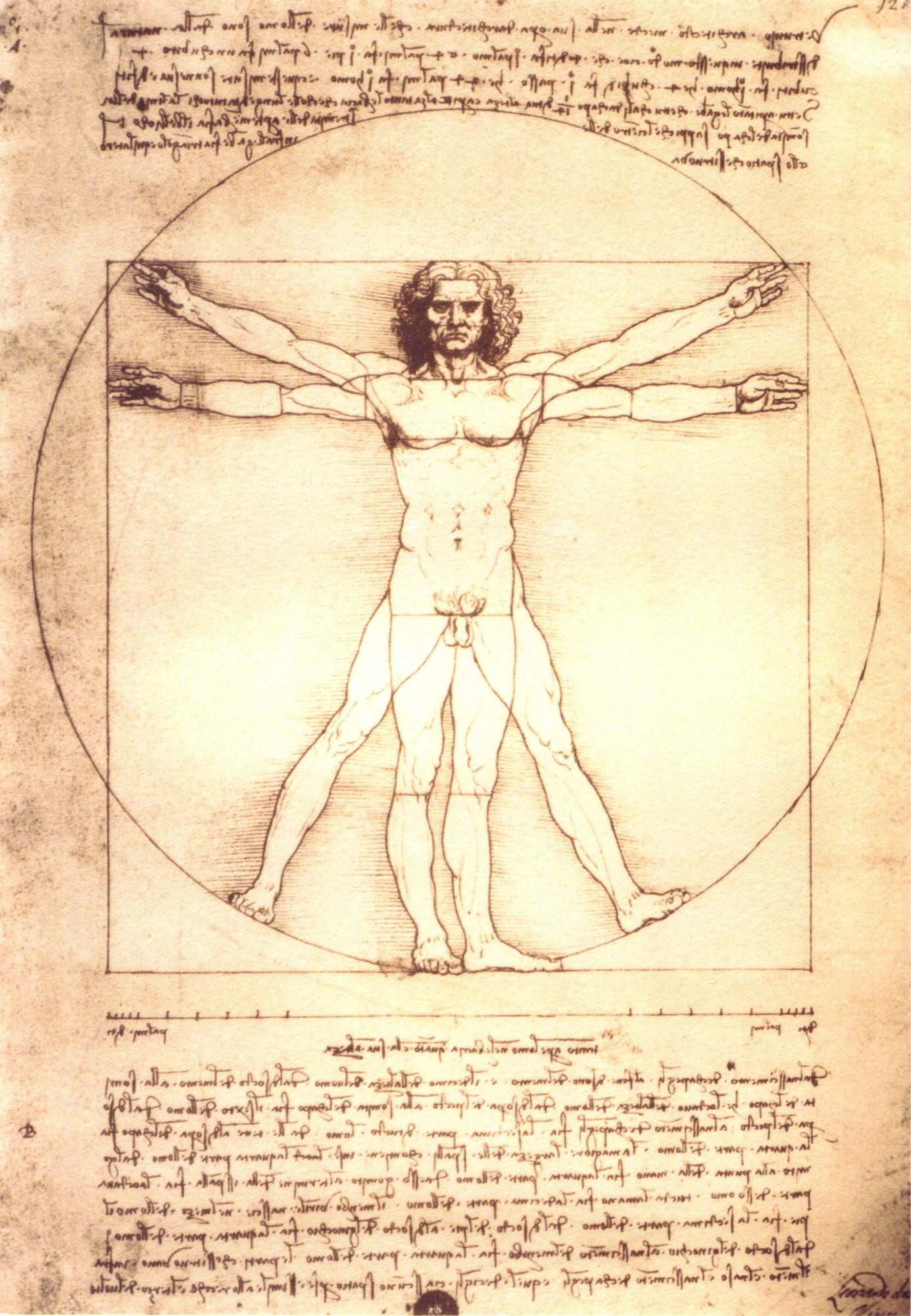
Wait, subjective? Yes, that's it! Since the problem is inherently subjective, then the answer should be subjective as well. What makes someone human is that is how you perceive them.
Allow that to sink in. Now, realize that is basically it. Someone is human because that is how you think of them. A dog is not human because you are not perceiving it as human, you are perceiving it as a dog. The reason we can get confused and caught up in objective details is because due to the sheer number and connectedness of humans today there is bound to be major overlap. The idea that someone human because "that is how you perceive them" as the solution to the equation allows for those little places where not everyone agrees. It works in every case because everyone is deciding from their respective viewpoint; hence, the answer fits all cases for all people. If there is indecision, then you simply do not have enough information on the subject to decide. I'm sure we will strive for a more... concrete definition, and perhaps some day we will come to it. Until then, though, this is why we still have juries.
Tuesday, April 14, 2015
The Pendulum of Society
The fact of human conflict is one that people have been trying to solve, or ignore, or come to terms with for a long, long time. Why is there this conflict? Where does it stem from? People often quote historical reasons, especially for large-scale conflicts, but this is a temporary solution. These historical conflicts, where do they stem from? And some conflicts don't even seem to have a historical reference to them. So why and how is this a constant and continual problem?
Of course, conflict between two parties of indeterminate size can take an infinite number of iterations to become selectively unique for each possible case. Generalizations are useful, but they blur lines. However, there seem to be common themes:
Of course, conflict between two parties of indeterminate size can take an infinite number of iterations to become selectively unique for each possible case. Generalizations are useful, but they blur lines. However, there seem to be common themes:
- Us vs Them: People make friends, build connections, create social lives. This is an inevitable part of being a "fully functioning" human being in today's global capitalist society. However, the creation of groups of "friends" inevitably leaves the rest of the people as "not friends". This is initially harmless; but, the system is that of a mathematically unstable "Inverted Pendulum". A little nudge in the direction of concretization and hostilization of the outside group will continue to lead to negative feelings until it culminates into two distinct parties. If we continue along this route, it becomes an ironic situation, where a group of people split themselves into halves multiple times based on multiple factors, such as first religion, then gender, then political affiliations... ect. Eventually you have a situation where in trying to gain friends you have successfully alienated yourself and others completely because everyone is somehow now on the "other side".
- Lack of Communication: A misunderstanding is also a common root cause of such things. People's severely limited physical means of expressing data and information (not to mention the highly dubious way of absorbing said "information") allow for error to add upon error and hence conflict to grow. This is usually done first to one side, where they misinterpret the true meaning of a message and respond harshly. Repeat. Or they don't respond at all, and the frustration of the event can have future consequences if the first party remains oblivious to the danger. Of course, lack of communication also manifests in convoluted information flows, allowing indirect (and hence, heavily distorted) data to come to one party. The party then forms conclusions based on aforementioned data and voila: resentment seeds planted.
- General Negative View of Fellow Humans and Their Flaws: What people seem to be largely unable to do is comprehend their own limits. One can only imagine how poor their judgement for other human beings is. Hence, it's a 50/50 chance of someone forming high expectations based on a limited data set. When these expectations aren't met, there is disappointment, or, in extreme cases, resentment. Sometimes one incident is enough, sometimes it takes multiple incidents, but in any case, the result remains virtually the same. The problem here is that people cannot seem to accept that humans are beautiful simply because they don't meet your expectations. It shows there's more to them then you where originally able to discern.

Hopefully, someday, people will actively try to eliminate these conflicts to ensure not only a better live for themselves in the long run, but also for everyone else. Unfortunately, I highly doubt this; it only takes one. One person to get mad. One person to push a bit. And down swings the pendulum.
Thursday, December 11, 2014
The Irony of Apathy
A few days ago, I found myself recommending to a friend of mine that he try to be a little more apathetic. That is to say, to care less about everything. This makes sense to a degree. You cannot care as much as you can about everything you come across and expect to come out emotionally whole. I accused myself of being as apathetic as I humanly could. However, upon further reflection, I find this to be untrue.
I accused myself of being so uncaring mostly on the grounds of my limited social life. However, it is quite the opposite. You see, it makes more sense that people with a larger social life would actually be the more apathetic ones. They would have a larger selection of friends to go through, and they would naturally care less about each friend individually. And due to the fact that the percentage difference would be negligible, the more friends you have, the less it hurts when you loose one. The opposite is true for someone with, say, 3-4 real friendships.
So, it comes down to a matter of perspective. If you are viewing yourself, your caring level is directly correlated to the number of friends you have. However, if you are observing someone else, then the relationship is inversely correlated. And that explains my original fault of judgement.
I accused myself of being so uncaring mostly on the grounds of my limited social life. However, it is quite the opposite. You see, it makes more sense that people with a larger social life would actually be the more apathetic ones. They would have a larger selection of friends to go through, and they would naturally care less about each friend individually. And due to the fact that the percentage difference would be negligible, the more friends you have, the less it hurts when you loose one. The opposite is true for someone with, say, 3-4 real friendships.
So, it comes down to a matter of perspective. If you are viewing yourself, your caring level is directly correlated to the number of friends you have. However, if you are observing someone else, then the relationship is inversely correlated. And that explains my original fault of judgement.
Wednesday, October 15, 2014
Au Contraire, Socrates
Socrates was an "armchair man". That is to say, he believed in sitting down and contemplating, thinking everything over, before taking any action. If action was to be taken at all. His demeanor and the background of his teachings can be summed up as just think, think, think. Contemplate, and you will know. Look deep inside yourself, and you will see. Ask questions to yourself, and with time, you will find the answer within. But you know what, Socrates?
I disagree.
 Of course, Socrates's position can be understandable considering the time period he grew up in. He was born into Athens, in Ancient Greece, which was a city of action and reaction. The Athenians even considered a man who did not actively participate in politics to be "useless". To say, if you did not have a strong opinion, or you did not act on it, your name was mud. And so to Socrates, who loved begin the rebel, sitting down and just contemplating for a bit was luxurious and a finger to the establishment. And for his spirit, I admire him.
But I cannot believe that I can formulate my own conclusions without going out and consciously testing them. I need to gather information, and then formulate a hypothesis. "Data, data, data, I cannot make bricks without clay." And I often find myself wrong when I try Socratic method. But that is not Socrates's fault. After all, he was elderly, late sixties, and he had a large knowledge base to draw upon. I, on the other hand, do not have the large data sets that come with old age. So while Socrates's method may have worked for him...
It just doesn't work for me. At least, not yet.
I disagree.
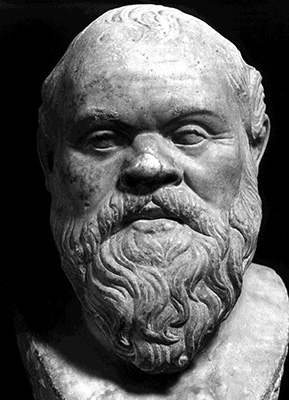 Of course, Socrates's position can be understandable considering the time period he grew up in. He was born into Athens, in Ancient Greece, which was a city of action and reaction. The Athenians even considered a man who did not actively participate in politics to be "useless". To say, if you did not have a strong opinion, or you did not act on it, your name was mud. And so to Socrates, who loved begin the rebel, sitting down and just contemplating for a bit was luxurious and a finger to the establishment. And for his spirit, I admire him.
But I cannot believe that I can formulate my own conclusions without going out and consciously testing them. I need to gather information, and then formulate a hypothesis. "Data, data, data, I cannot make bricks without clay." And I often find myself wrong when I try Socratic method. But that is not Socrates's fault. After all, he was elderly, late sixties, and he had a large knowledge base to draw upon. I, on the other hand, do not have the large data sets that come with old age. So while Socrates's method may have worked for him...
It just doesn't work for me. At least, not yet.
Wednesday, September 24, 2014
Absolutely Outrageous!
People have a tendency to organize themselves into groups. It's natural human sociology. It's most often seen today in national identities, consumer choices, and arguably most importantly, religion. But things can get out of hand. And now I am very upset at the recent event that have transpired at Springs Charter School.
 You see, Springs Charter School has been called out many times by many different people because of their pulling of certain books from their shelves. They took down Corrie ten Boom's The Hiding Place because it quoted passages from the bible. This is the result of a larger request to pull down all books that are "Christian books, books by Christian authors, and books from Christian publishers."
This is outrageous.
But what most people don't realize is that this is just the tip of the iceberg.
As a student of Springs Charter School (oh yes, I am a student there), the first I heard about this was not from the bookstore, but from my teacher. Who was fired. For his religious beliefs. For being christian.
Let me tell you the whole thing.
My teacher, Mr. Jonston, was my science teacher, and a good one at that. He was kind, patient and tolerant. He helped everyone whenever they asked for it, and is (now was) one of the best teachers anyone could ask for. But he was a christian science teacher. He told us that he was christian. He told us that he believed that evolution had some holes in it. And it does. And knowing that there are holes in scientific theory helps us practice good science in questioning everything. And yet he was fired for it.
Myself and virtually all of his students are absolutely shocked over this. We didn't even have a chance to say goodbye to him before they ripped him from his employment. We're going to create a petition and present it to the school. Because I will not sit here and watch an innocent man loose his job over his religious beliefs!
I hope to get the word spread as far as I can about this. Something needs to be done. I hope to get the school to offer Mr. Jonston back his teaching position. And hopefully, with enough people, we'll be able to do just that.

This is outrageous.
But what most people don't realize is that this is just the tip of the iceberg.
As a student of Springs Charter School (oh yes, I am a student there), the first I heard about this was not from the bookstore, but from my teacher. Who was fired. For his religious beliefs. For being christian.
Let me tell you the whole thing.
My teacher, Mr. Jonston, was my science teacher, and a good one at that. He was kind, patient and tolerant. He helped everyone whenever they asked for it, and is (now was) one of the best teachers anyone could ask for. But he was a christian science teacher. He told us that he was christian. He told us that he believed that evolution had some holes in it. And it does. And knowing that there are holes in scientific theory helps us practice good science in questioning everything. And yet he was fired for it.
Myself and virtually all of his students are absolutely shocked over this. We didn't even have a chance to say goodbye to him before they ripped him from his employment. We're going to create a petition and present it to the school. Because I will not sit here and watch an innocent man loose his job over his religious beliefs!
I hope to get the word spread as far as I can about this. Something needs to be done. I hope to get the school to offer Mr. Jonston back his teaching position. And hopefully, with enough people, we'll be able to do just that.
Tuesday, September 16, 2014
What makes a friend?
Back to the question, what makes a good friend? Many poeple try to rate freinds based on certain attributes, like loyalty, or similarity to oneself. But, as I said, friendship is subjective, and so the answer to the question must be similarly flexible. And since friendship is mutual, it needs to go both ways. What is the common denominator? What is a friend?
It's someone you trust. Friendship is built upon trust. You're not friends with someone you don't trust. And it is no coincidence that people who trust more easily have a better time at making friends. Friends are the people you trust, and who trust you back. Love and affection cannot thrive without the nuturing care of trust. And so, friendship, to me, means trust.
Tuesday, September 9, 2014
What do we actually fear?
It's a difficult quesition to answer at best. Fear is, after all, subjective, and therefore liable to change from person to person. Everyone seems to have different answeres. Is it suspense? Or how about danger to self? What does everyone's answers have in common? Ah, but in order to find out what we truly fear, first we must examine what it is we do not fear.
 For example, imagine a rabbit. Nothing to fear there, right? Just a cuddly ball of fur. Eats vegetables, hops around, nibbles on grass. It's mundane, understood. But then, say you had this rabbit, but with blood around it's mouth. Suddenly, not so care free, are we? What happened to the rabbit? Why is it suddenly frightening? Because of the blood? No, no... think deeper. Before, we could understand it. It was predictable. Now, however, we do not fully understand it. Rabbits don't eat meat, so why is there blood on it's muzzle? How did it get there? Is there something about the rabbit that I should know about? Should I be scared?
And there you have it. You fear something which you do not fully understand, something you do not know how to react to. I gave the rabbit a cloak, a veil behind which to hide, the instant I put blood on it's muzzle. You sensed the deception, but you knew not what I'd hidden behind the drapes. You reacted, you feared, the unkown. And that's what makes us so afraid. We truly fear that which we cannot understand. That's what all our answers have in common, and that's what we will always be afraid of.

And there you have it. You fear something which you do not fully understand, something you do not know how to react to. I gave the rabbit a cloak, a veil behind which to hide, the instant I put blood on it's muzzle. You sensed the deception, but you knew not what I'd hidden behind the drapes. You reacted, you feared, the unkown. And that's what makes us so afraid. We truly fear that which we cannot understand. That's what all our answers have in common, and that's what we will always be afraid of.
Wednesday, September 3, 2014
A Probablility
People have always been fascinated with the future. Who do I marry? When and how do I die? It's in our nature to speculate and hope towards a certain outcome. "I hope that I win the lottery", or, "I hope it does't rain today." And these are all legitimate sources of hope and speculation. You might win the lottery. I might not rain today. But is there a way to know for sure?
 Alber Einstein famously once said; "God does not play dice with the universe." He did not like to
 believe that things like weather are random. He believed that you could predict the trajectory of a particle just as you could with a space ship. And many shared his views at the time. But he was, eventually, proven wrong.
If you go down small enough, to a quantum level, you begin to encounter odd things. Quantum tunneling and the likes. Things that are an example of Non-Zero Probability. In other words, things having a Non-Zero Probability of happening become more probable, and therefore easier to observe. This Non-Zero Probability shows the fundamental, probabilistic nature of the universe and reality itself. So there is a Non-Zero Probability of anything happening. The moon falling out of the sky. Things that seem impossible, but by the laws of quantum mechanics, aren't.

We may regard the present state of the universe as the effect of its past and the cause of its future. An intellect which at a certain moment would know all forces that set nature in motion, and all positions of all items of which nature is composed, if this intellect were also vast enough to submit these data to analysis, it would embrace in a single formula the movements of the greatest bodies of the universe and those of the tiniest atom; for such an intellect nothing would be uncertain and the future just like the past would be present before its eyes.
—Pierre Simon Laplace, A Philosophical Essay on Probabilities
In other words, if you were to be able to know the exact placement of every particle in the universe and it's juxtaposition to every other particle, then you could predict how all those particles would interact, and therefore know where all the other particles would be the next second. You could also deduct where the particles had been a second ago. This means that you could, in essence, predict the future. You would be able to know about all the interactions of all the particles because you know everything from an instant in the history of the universe. And with this power of predicting the future you would be able to predict people's future's as well, because, after all, we are part of the universe. And if we follow this path to the logical conclusion, then that means that you are predictable, down to an atomic scale.
And that means that free will is merely an illusion. When Einstein rejected randomness, he rejected the idea of a free human being. Luckily for you and me, he was wrong in this one thing. So we can all be grateful for the universe and it's essential randomness. It makes us fully, truly, human.
Friday, August 15, 2014
A Deep Narcism
 Human beings are amazing in the ability to imagine, express, process, and emphasize with different realities, usually created by different human beings. Be the format in literature, in painting, in film, or merely an idea in your head. Regardless, we are able to use our brains to create beautiful and complex fictional worlds.
But we're not so good at some things. I mean, can you imagine a new color? In any case, one that particularly peeves me is the whole "aliens" genera of fiction. The most obvious pitfall is when you see aliens that are humanoid or resemble anything living on our own world. I mean, who says that bipedalism (or quadrupedalism) is the best or only way to transport oneself in traditional space over solid terrain? And the thought that all living organisms keep both their central nervous system and most of their major sensory organs on a venerable, extended appendage? Preposterous!
Not to mention that they're carbon based, water necessitating, solid-food consuming creatures. Or that they see in "visible" light. Or that they smell. They tolerate the same approximate temperature range. And goodness knows what else! Some people have gotten far even by my standards, yes, but the fact that most of our media seems dependent on the idea that life that evolved isolated from our biogenetic influence somehow ended up similar to ours shows a deep seated, and often unnoticed, narcism.
Now, in a way, our inability as a people to conceive of something truly and unspeakably new makes the moment when we view another complex organism all the more awe inspiring! The chemistry that it creates, the biology of it as a whole would be mind-blowinly fascinating merely due to the fact that we could not have conceived of it unless we where to actually be beholden to it. And it guarantees that when, if, we do meet life on an exoplanet, humanity as a whole will be amazed. As Shakespeare once said; "There is more on heaven and earth, than is dreamt of in your philosophy."
Tuesday, August 12, 2014
Mistakes Abound
I get very depressed and unresponsive every time I think about the fact that I seem to regret pretty much everything I've said and done. Why did I say that? Why didn't I do that? So on and so forth. And I doubt I'm alone in this. We grimace at the memory of what we used to be, how silly, how stupid we were. We see ourselves in hindsight and cringe at it. Remembering how you handled something with fondness is like finding money stuck in a library book. Unexpected and pleasantly surprising.
 And this is paradoxical. The fact that we see our mistakes means that we can learn form them, which in turn means that we are evolving and refining ourselves. That thought alone should be enough to counteract the regret of your actions, or lack thereof. But instead we're cursed to linger on and exaggerate the gaffes of or past selves.
Evolutionarily speaking, it does makes sense. Those who remember their missteps more acutely than others are less inclined to make the same mistake twice, which, in the wild, can be lethal. Human nature has evolved in order to cause us to make as few mistakes as possible, particularly social. But sometimes it goes too far, and the bitterness over your past is enough to drive anyone mad.
And thinking along those lines, anyone who says your mistakes don't define you, well, think about it more carefully. Your choices define you, do they not? So, mistakes are a slice of that pie. You can't just ignore something that influences your thought processes so profoundly, both logically and emotionally, merely because you don't like your self-criticism.
But I suppose the best thing we can do is to just learn from our oversights and make the best of it. Just because you don't like it or agree with it doesn't mean that you can just ignore your past, lest your future pay.
 And this is paradoxical. The fact that we see our mistakes means that we can learn form them, which in turn means that we are evolving and refining ourselves. That thought alone should be enough to counteract the regret of your actions, or lack thereof. But instead we're cursed to linger on and exaggerate the gaffes of or past selves.
Evolutionarily speaking, it does makes sense. Those who remember their missteps more acutely than others are less inclined to make the same mistake twice, which, in the wild, can be lethal. Human nature has evolved in order to cause us to make as few mistakes as possible, particularly social. But sometimes it goes too far, and the bitterness over your past is enough to drive anyone mad.
And thinking along those lines, anyone who says your mistakes don't define you, well, think about it more carefully. Your choices define you, do they not? So, mistakes are a slice of that pie. You can't just ignore something that influences your thought processes so profoundly, both logically and emotionally, merely because you don't like your self-criticism.
But I suppose the best thing we can do is to just learn from our oversights and make the best of it. Just because you don't like it or agree with it doesn't mean that you can just ignore your past, lest your future pay.
Tuesday, July 29, 2014
Transcending Moral Polarity
I have a moral issue with the terms "good" and "bad", because not only are they so ambiguous as to be less than helpful, but also the idea that something is either good or bad is inherently flawed. To think that something is evil merely for the sake of being evil is narrow minded and just wrong. And there's the other side of the coin. No one, and nothing, is ever truly good.
 So, rather than blunder our way through the day bluntly firing off crudely fashioned statements containing or implying inherent moral polarity, we must use more appropriate adjectives. Not only does this fix the fact of assuming that something is good or bad, but it makes it a more accurate statement, and, more importantly, it puts emotion into your sentence. For example, if you where to say; "You looked good today.", how is the person receiving the compliment sure that it is, in fact, a compliment? People through out the words "good" and "bad" all the time like there's no tomorrow. But if you where to say; "You looked fabulous today.", they automatically understand that you're being sincere (as long as you adopt the right tone of voice), because now you've taken the time to select a specific word from your vocabulary for the sole purpose of complimenting another person, and that makes them feel good.
So, rather than blunder our way through the day bluntly firing off crudely fashioned statements containing or implying inherent moral polarity, we must use more appropriate adjectives. Not only does this fix the fact of assuming that something is good or bad, but it makes it a more accurate statement, and, more importantly, it puts emotion into your sentence. For example, if you where to say; "You looked good today.", how is the person receiving the compliment sure that it is, in fact, a compliment? People through out the words "good" and "bad" all the time like there's no tomorrow. But if you where to say; "You looked fabulous today.", they automatically understand that you're being sincere (as long as you adopt the right tone of voice), because now you've taken the time to select a specific word from your vocabulary for the sole purpose of complimenting another person, and that makes them feel good.
Of course, there are drawbacks. If you're texting, and you use a positive adjective to compliment another person, you have no control over how it's read. That person can read it as sincere or sarcastic, or any shade in between, and there is very little you can do to change it. If you type; "You looked fabulous today.", fabulous can be inflected to either actually mean fabulous, or to be derogatory and detrimental. Only one of the reasons I dislike communicating through text (although, the advantages pretty much break even with the disadvantages).
So, you should use words other than "good" or "bad". But everything depends on context. One slip of the tone, and you can find yourself being extremely degrading rather than helpfully uplifting.
Subscribe to:
Posts (Atom)